Shopping list, 22 June 2026
A batch of parts is going into the cart for the hoverboard firmware bring-up. These are not recommendations I am handing down from on high, they are the things I am actually about to buy for the bench. The links are affiliate links (if you buy through one I get a small AliExpress commission at no extra cost to you), and I am ordering all of these for myself, except the Raspberry Pi Pico 2 W at the end, which I already have. The photos are the sellers’ listing images. Prices are as of 22 June 2026 (NOK from the listings, the others converted at that day’s rate), and AliExpress prices move around a lot.
Power
The board runs off a 10S pack, which is about 36V nominal and ~42V fully charged, so any step-down has to survive more than 40V on the input. That rules out the common LM2596 (40V max) and points at the HV parts. I am buying three to compare, since they are cheap:
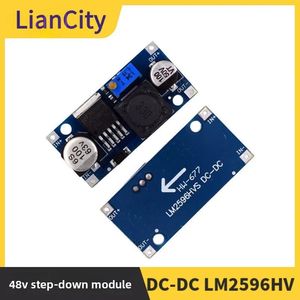
LM2596HV, 4.5–60V in (~25 kr · $2.6 / €2.3 / £2.0). Best headroom over a full pack, cheapest single module.
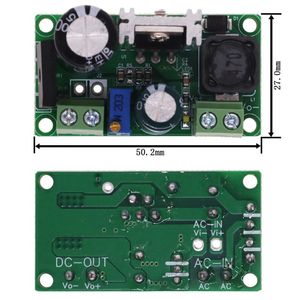
LM2596HV, 5–50V in (~24 kr · $2.5 / €2.1 / £1.9). The same module I first picked, plenty for 42V.
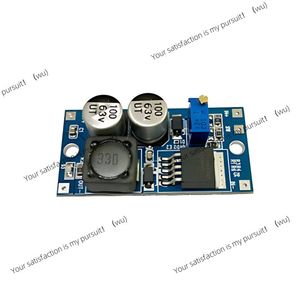
LM2596HV, 5–60V in (~77 kr · $8.0 / €6.9 / £6.0). Pricier single unit, also 60V headroom.
For bench work where I want a current limit while bringing up a power stage:
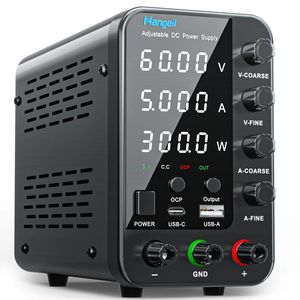
DC lab bench power supply, 30/60/120V adjustable (~784 kr · $81 / €71 / £61). Preset current, the thing that saves a bridge when an alignment is wrong.
Wiring
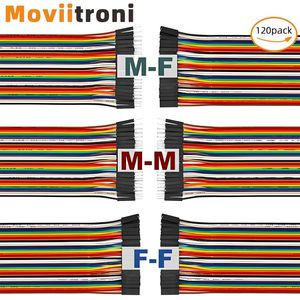
Dupont jumper wire kit, 40-pin, M-M / M-F / F-F (~30 kr · $3.1 / €2.7 / £2.4). The listing has a gender option, so choose the female-to-female (F2F) variant, for jumping between the boards' male pin headers.
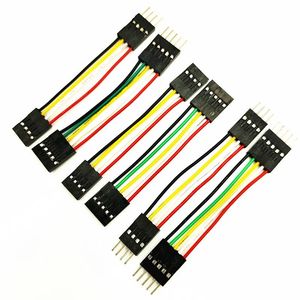
Short 5cm Dupont breadboard jumpers, 26AWG (~26 kr · $2.7 / €2.3 / £2.0). For keeping the bench tidy; choose the female-to-female variant here too.
Drive input
The firmware needs a throttle source to test drive and steer commands, and e-scooter thumb throttles are a clean analog input:
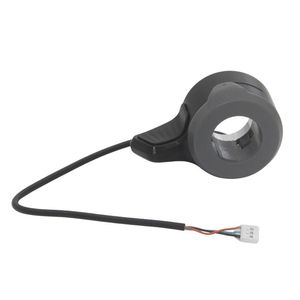
Thumb throttle for NIU KQi2 / KQi3 (~61 kr · $6.3 / €5.5 / £4.8).
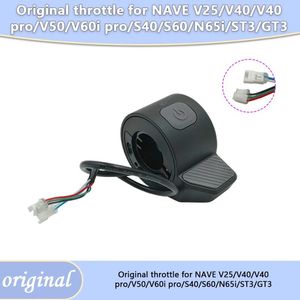
Thumb accelerator for Nave V-series (~91 kr · $9.4 / €8.2 / £7.1).
Microcontrollers
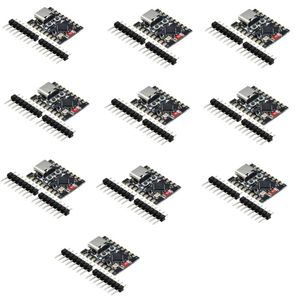
ESP32-S3 SuperMini (~38 kr · $3.9 / €3.4 / £3.0). A capable general-purpose bench MCU, plenty of UARTs and RAM.
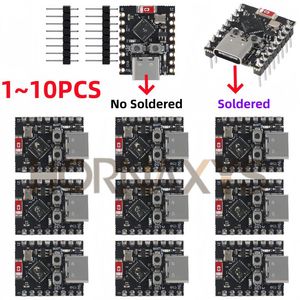
ESP32-C3 SuperMini (~247 kr · $25 / €22 / £19, multi-pack). The same part that already rides on each board as the wireless SWD probe.
Display
The Cheap Yellow Display (the ESP32-2432S028R, “CYD”): an ESP32-WROOM with a 2.8” 320×240 resistive touchscreen on a yellow PCB. A whole community has grown up around it (Brian Lough’s ESP32-Cheap-Yellow-Display, LVGL examples everywhere), which makes it the easy path to a little touch UI, a config screen, or a bench status readout.
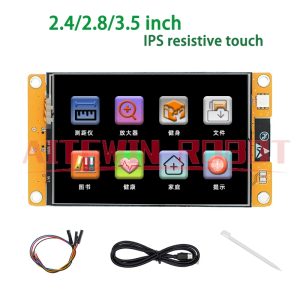
Cheap Yellow Display (ESP32-2432S028R) (~150 kr · $15 / €13 / £12). 2.8" 320×240 ILI9341 resistive touch, microSD, ESP32-WROOM. Get the single-USB board; the dual-USB variant has driver quirks.
RS485 sniffer
I want a microcontroller with two RS485 ports to passively watch both directions of a 4-wire RS485 link on an RTK GPS. The obvious option, a Raspberry Pi RS485 CAN HAT, has two RS485 channels but drags a whole Pi along. A genuine two-port microcontroller board is rare (almost every “ESP32 RS485” board is one RS485 plus a CAN), but the Pico carrier below is a clean fit: two SP3485 transceivers on the Pico’s two independent hardware UARTs (GP0/1 and GP4/5), exactly what a full-duplex tap needs. It is not isolated, which is fine for a low-voltage bench tap.
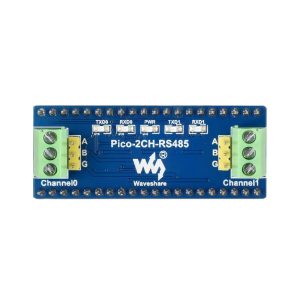
Pico-2CH-RS485 board (~109 kr · $11 / €9.8 / £8.5). The RS485 front-end: two SP3485 transceivers wired to the Pico's two UARTs. You supply the Pico.
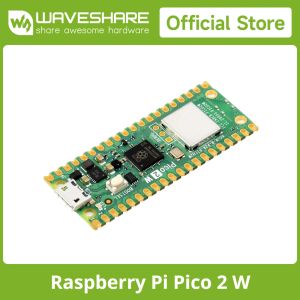
Raspberry Pi Pico 2 W (~119 kr · $12 / €11 / £9.3). The brain that plugs into it; the W adds WiFi for streaming captures off the bench. I already have one, so this is the only thing here I am not buying, linked for anyone building along.
Untested, for now
None of these are tested yet, they are just what I am ordering. Once they arrive and I have put them to work on the bench, I will report back on how well each one actually holds up.